Frozen Pipe Cleanup in Maple Grove, MN
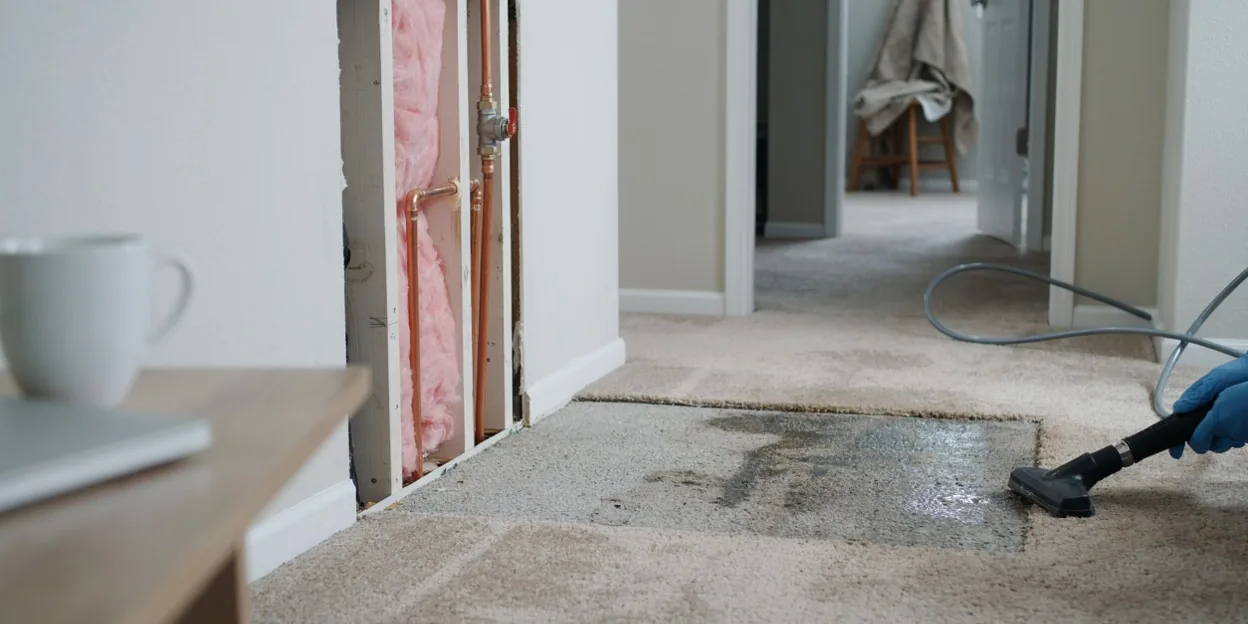
The cold snap finally broke on a Saturday. By Sunday afternoon there was water dripping from the garage ceiling under the bonus room, a brown stain spreading across the drywall, and a soft spot in the carpet upstairs where the bathroom supply line runs through the floor. This site puts you through by phone to an independent local provider who cleans up after frozen pipes in Maple Grove and the northwest Hennepin County suburbs.
Reading the timeline from the thaw backward
A frozen line holds its water until it thaws. The ice plugs the split until the house warms, so the water usually appears a day or two after the temperature climbs, and the crew's first question is when you found it and when the cold broke. That gap says how long the framing has been wet. They confirm the main is closed, pump or extract any standing water, and then meter the wall or ceiling on both sides of the split, the floor under it, and any room below. In a two-story with a bath over the garage, that means the garage ceiling, the rim joist, and the bathroom floor all get read.
Frozen-pipe losses start in the coldest framing: the rim joist where the floor system meets the foundation, the garage ceiling under a heated room, the exterior wall behind a kitchen sink, and the hose bib line on the north side. Water follows the joists and the studs down to the plate and out across whatever is below.
Close the main, warm the house, skip the torch
Shut the main valve by the meter and leave it shut until a plumber has found the break, because a second frozen section often lets go as the house warms. Turn the heat up and open the cabinet doors under the kitchen and bathroom sinks on exterior walls. Open the garage door for a minute only if you need to get something out; otherwise keep it closed and the garage as warm as it gets. Do not aim a torch or a heat gun at a pipe inside a wall. Move what you can away from the wet area, take photos of the ceiling and the floor, and make the call. The plumber fixes the pipe. The cleanup provider dries the house.
Framing that dries, insulation that leaves
Framing that is reached inside a few days usually dries in place, including the rim joist and the floor joists under a bathroom. Fiberglass insulation in a wet garage ceiling or exterior wall comes out, because it held the water against the wood and will keep it there. The drywall in front of wet insulation comes with it. Upstairs carpet often dries once the pad is removed, and a bathroom floor with sheet vinyl over wet subfloor usually has to be lifted so the subfloor can be read.
If water ran from an upstairs split down to the basement, the lower level gets the same treatment as a basement flooding cleanup. Where the stain is on a ceiling and the pipe above is still hidden, leak detection can narrow the opening to the right bay. Once the wet material is out, structural drying runs until the framing matches a dry reference.
Where a Maple Grove house freezes first
Builders in Maple Grove set footings about three and a half feet down to clear the frost, but the supply lines in a 1990s two-story go where the plumber ran them: through the rim joist to a hose bib, across a garage ceiling to a bathroom above, and up an exterior wall to a second-floor sink. Those runs freeze when the temperature holds below zero for several nights in a row. The late-January 2019 outbreak took the airport to 28 below on January 30, the coldest reading in the Twin Cities since 1996, and plumbers across the metro were running frozen-pipe calls for a week once the thaw came. Another below-zero stretch arrived in mid-January 2024 after a mild December that left the ground with little snow cover to hold the frost down. The National Weather Service office in Chanhassen posts the cold warnings a few days ahead, which is the time to open cabinet doors and let a faucet drip.
Houses that sit empty over a winter trip are the classic frozen-pipe case. A thermostat at 55 keeps the living room fine and the garage ceiling frozen. If you travel in January, shut the main and open a tap, or have a neighbor walk through every couple of days.
A split pipe is commonly treated as a sudden loss under a homeowner policy, though some policies treat a frozen pipe in an unheated or empty house differently. This site cannot say what yours does. Have the crew record the date you found the water, the first readings, and the photos so the timeline reaches the adjuster on paper.
What to tell us when a pipe has frozen
Say where the water showed up, whether the main is closed, and whether a plumber is on the way. Mention if the house was empty, for how long, and whether the water reached a finished basement. Call (763) 314-1771.